The notch is here to stay - or at least, that's
what it looks like when you consider all the smartphones that have
launched over the past few weeks. Vivo was the first to introduce the
notch on an Android smartphone in India with its Vivo V9, and we have
recently seen more examples such as the OnePlus 6 and the Huawei Honor
10. Vivo is now once again quick to claim another first in India. The
X21 is most notable for its fingerprint sensor which is embedded under
the display glass. We were able to spend some time with the Vivo X21
prior to its official launch, and here are our first impressions.
With
the new X21, Vivo has introduced its X series in India, creating a tier
above its V series. The packing is a little different from what we've
seen before, with a large FIFA logo on the box, primarily because Vivo
is one of the sponsors of the FIFA World Cup in Russia this year. Vivo
has launched special editions internationally, but there is no news of
such a version making its way to India yet. The box contents are fairly
straightforward. Apart from the Vivo X21 itself, you get a pair of
in-ear headphones, a fast charger, a Micro-USB cable, and a case. Hold
the Vivo X21 and you will find that it has a premium feel, thanks to
its metal frame and glass back. We found that the glass back does pick
up fingerprints so you might need to put the supplied case to use. The
screen has thin borders at the top and the sides but the bottom is
comparatively thicker. The Vivo X21 isn't too heavy at 156.2g. It has a
dual camera setup at the back, positioned towards the left, along with a
single-LED flash. The phone does look a lot like the Vivo V9 from the
back - sans the fingerprint scanner.
Hold
the Vivo X21 and you will find that it has a premium feel, thanks to
its metal frame and glass back. We found that the glass back does pick
up fingerprints so you might need to put the supplied case to use. The
screen has thin borders at the top and the sides but the bottom is
comparatively thicker. The Vivo X21 isn't too heavy at 156.2g. It has a
dual camera setup at the back, positioned towards the left, along with a
single-LED flash. The phone does look a lot like the Vivo V9 from the
back - sans the fingerprint scanner.
The power and volume buttons
are on the right, and are within reach when holding the phone. The left
side of the Vivo X21 is completely blank. At the top, you still have a
3.5mm audio socket which can be used to plug in your headphones.
Interestingly, the SIM card tray is at the bottom, next to the Micro-USB
port and speaker grille. We aren't thrilled to see a Micro-USB port,
and feel that Vivo should have opted for USB Type-C for this phone.
While
we have become used to having fingerprint sensors on smartphones, not
actually seeing a physical one on the X21's body does feel odd. Vivo has
integrated the scanner into the display glass, making this the first
phone in India to have such a feature. The X21 also offers face
recognition to unlock your phone, using the selfie camera.
The
front is dominated by a 6.28-inch fullHD+ AMOLED display with a 19:9
aspect ratio. The phone has a pre-applied screen protector despite using
Corning Gorilla Glass 3. Just like most other AMOLED panels, this too
has punchy colours. The notch at the top houses the earpiece, the selfie
camera, and other sensors. Pick
the phone up and you will see that a fingerprint icon lights up in the
lower middle of the display, showing you where you'll need to place your
finger. Press down on it, and it will glow brighter while it scans for
prints. Vivo suggests that you apply a bit of pressure for better
results. There's also an animation that plays when scanning your finger,
which does look cool. We found that the symbol stops glowing when the
phone is left idle for a while. You will need to hit the power button,
double-tap the display, or pick the phone up to reactivate it, making it
slightly less functional than a conventional fingerprint scanner.
Pick
the phone up and you will see that a fingerprint icon lights up in the
lower middle of the display, showing you where you'll need to place your
finger. Press down on it, and it will glow brighter while it scans for
prints. Vivo suggests that you apply a bit of pressure for better
results. There's also an animation that plays when scanning your finger,
which does look cool. We found that the symbol stops glowing when the
phone is left idle for a while. You will need to hit the power button,
double-tap the display, or pick the phone up to reactivate it, making it
slightly less functional than a conventional fingerprint scanner.
Powering
the Vivo X21 is a Snapdragon 660 SoC, which is an octa-core processor
clocked at 2.2GHz. There is 6GB of RAM and 128GB of storage. You do have
the option to expand storage using the hybrid SIM slot, but will have
to sacrifice the second SIM. The smartphone runs on Android 8.1 Oreo
with Vivo's custom FunTouch UI 4.0 on top. What is interesting is that
the X21 is also a part of the Android P Beta programme that Google is
running right now, meaning that the phone has a good chance of being
updated to the upcoming version of Android quickly. The
dual camera setup on the X21 consists of one 12-megapixel sensor along
with a 5-megapixel secondary sensor. The primary camera has dual-pixel
technology and a f/1.8 aperture, and is capable of capturing 4K videos
at 30fps. At the front you get a 12-megapixel shooter for selfies and
face recognition. We had a brief chance to fire up the camera app, and
we found that the primary camera is super quick to focus.
The
dual camera setup on the X21 consists of one 12-megapixel sensor along
with a 5-megapixel secondary sensor. The primary camera has dual-pixel
technology and a f/1.8 aperture, and is capable of capturing 4K videos
at 30fps. At the front you get a 12-megapixel shooter for selfies and
face recognition. We had a brief chance to fire up the camera app, and
we found that the primary camera is super quick to focus.
To keep
the smartphone going, Vivo has dropped in a 3200mAh battery which is
non-removable. You get a fast charger rated at 18W in the box, which we
hope can top this phone up quickly.
Huawei's sub-brand Honor has recently launched the
Honor 10 in India. Artificial intelligence is the hottest marketing
buzzword right now, and Honor claims to have incorporated AI features
into almost every aspect of the Honor 10 - from intelligent scene
detection and face recognition in the camera app, to user interface
enhancements in its custom skin, EMUI 8.1.
With a glass and metal
body, the latest version of Android out of the box, dual rear cameras, a
19:9 display, and a processor with dedicated AI hardware, the Honor 10
sounds incredibly promising on paper. Priced at Rs. 32,999, this
smartphone also slightly undercuts the much-hyped OnePlus 6 in terms of
price. Is the Honor 10 worth buying? We found out in our full review.Honor 10 designThe
Honor 10 has a 2.5D curved glass back and a highly polished metal
mid-frame for rigidity, making it bear some resemblance to the iPhone X.
The glossy glass back looks and feels premium but is slippery and gets
smudged very easily. Despite having a glass back, there is no wireless
charging, which seems like a missed opportunity.
The Honor 10 has
minimal screen borders and an impressive 86.2 percent screen-to-body
ratio. As a result, it looks sleek and is quite compact and pocketable.
It is also easy to hold in one hand thanks to the curved glass back,
rounded corners, and curved edges.
The notch is fast becoming one
of the most polarising elements of smartphone design. The Honor 10
embraces this trend head-on and has a notch at the top of the display.
Thankfully, it's is quite small and can be masked via an option in the
settings menu.
This smartphone is available in two colours in
India, Midnight Back, and Phantom Blue. The Blue variant looks quite
snazzy and has a glass back that reflects light when you turn it in your
hand. This option definitely has a lot of design flair, but we reviewed
the black variant which looks much more understated.
In order to
accommodate minimal screen borders and edge-to-edge displays, most
smartphone manufacturers have had to shift the fingerprint sensor to the
back panel. The Honor 10's fingerprint sensor however is still below
the screen, but embedded into the glass panel itself. Honor has used
Qualcomm's ultrasonic fingerprint technology for biometric
authentication. The sensor looks quite futuristic but is hard to reach
with one hand, and is also slow and inaccurate. The setup process also
took far longer than we are used to. The
power and volume buttons are located on the right of the device and are
a tad too small for our liking. The left edge is barren save for the
SIM tray which has two Nano-SIM slots. The Honor 10 has a USB Type-C
port at the bottom flanked by a 3.5mm headphone jack and a speaker which
is loud but distorts at full volume.
The
power and volume buttons are located on the right of the device and are
a tad too small for our liking. The left edge is barren save for the
SIM tray which has two Nano-SIM slots. The Honor 10 has a USB Type-C
port at the bottom flanked by a 3.5mm headphone jack and a speaker which
is loud but distorts at full volume.
Build quality is
impressive, and the phone feels solid and capable of taking a drop or
two in its stride. We dropped the phone several times during our review
period and apart from a few scratches here and there, it was unscathed.
At 7.7mm, the Honor 10 is not the thinnest around, but it weighs a
reasonable 153g.Honor 10 specifications and displayThe
Honor 10 is powered by Huawei's own HiSilicon Kirin 970 processor,
which has been used in several premium models in the recent past, such
as the Huawei Mate 10 Pro, Huawei P20 Pro, and Honor View 10. The Kirin
970 has a dedicated subsystem, dubbed the Neural Processing Unit, to
handle artificial intelligence computations. This promises better
privacy and performance as AI computations can happen on the phone
itself and data doesn't need to be uploaded to the cloud.
The
Honor 10 has 6GB of RAM, a non-removable 3,400mAh battery, and 128GB of
storage which cannot be expanded. Connectivity options include Wi-Fi
802.11ac, Bluetooth 4.2, GPS, GLONASS, NFC, 4G VoLTE, a USB Type-C port
(USB 2.0 speed), and a 3.5mm headphone jack. The smartphone also has a
digital compass, ambient light sensor, gravity sensor, gyroscope, and
Hall sensor. It supports dual SIMs but only one at a time can run at 4G
speed - the other is limited to 3G. The
Honor 10 features a 5.84-inch full-HD+ IPS LCD with an aspect ratio of
19:9 and a pixel density of 432ppi. You can choose between FHD+ and HD+
in the settings menu in order to save battery life, or set it to auto
and let the phone decide for itself.
The
Honor 10 features a 5.84-inch full-HD+ IPS LCD with an aspect ratio of
19:9 and a pixel density of 432ppi. You can choose between FHD+ and HD+
in the settings menu in order to save battery life, or set it to auto
and let the phone decide for itself.
As with most Honor
smartphones of late, the display is bright, vivid and punchy, and has
excellent viewing angles. It is a bit too reflective though, which makes
outdoor legibility a bit of a problem. A Quad-HD display would have
rounded off the package nicely, but the lower resolution can't really be
discerned in day-to-day use.
In our experience, most first-party
applications ran fine on the smartphone's display, with the area around
the notch being used to display the time, battery level, signal
strength, and other status icons. The 19:9 aspect ratio lends itself
well to gaming and multimedia consumption.Honor 10 performance, software, and battery lifePerformance
was stellar - the phone handled everything we threw at it with ease, be
it heavy games such as Asphalt 8, basic day-to-day tasks, or intensive
workloads. Calls were clear and crisp, and 4G reception was solid, even
in areas known to have sketchy connectivity. On a negative note, the
smartphone got very hot, to the point of it becoming uncomfortable to
hold, when pushed.
Benchmark scores were impressive, putting the
Kirin 970 in the same league as last year's Qualcomm Snapdragon 835, but
behind the latest generation of processors. The phone achieved 204,439
points in AnTuTu, 23fps in GFX Bench Car Chase, 38fps in GFX Bench
Manhattan 3.1, and 1,894 and 6,678 respectively in Geekbench's single-
and multi-core tests. The
Honor 10 runs Honor's EMUI 8.1 skin atop Android 8.1 Oreo. EMUI has
matured a lot in the last few years and is now a slick and feature-laden
software package. Huawei claims that EMUI 8.1 uses machine learning to
intelligently analyse user behaviour and allocate resources accordingly,
While a few weeks of use is not enough to thoroughly test this, EMUI
did run smoothly during our review period - animations were snappy and
navigating throughout the interface was a frustration-free affair.
The
Honor 10 runs Honor's EMUI 8.1 skin atop Android 8.1 Oreo. EMUI has
matured a lot in the last few years and is now a slick and feature-laden
software package. Huawei claims that EMUI 8.1 uses machine learning to
intelligently analyse user behaviour and allocate resources accordingly,
While a few weeks of use is not enough to thoroughly test this, EMUI
did run smoothly during our review period - animations were snappy and
navigating throughout the interface was a frustration-free affair.
What
compromises the experience somewhat is the amount of bloatware. The
phone comes with five game demos from Gameloft and a bunch of
third-party apps including UC Browser, TrueCaller and Quik preinstalled.
Thankfully, most of these can be uninstalled. Additionally, a few areas
of the interface such as the Settings app and the quick settings panel
still look cluttered and need simplification.
EMUI has a
multitude of nifty features such as a one-handed mode, knuckle gestures,
an intelligent messages app that filters out spam, and the ability to
automatically switch between Wi-Fi and mobile data depending on which
connection is stronger. The
Honor 10 also supports face recognition, using the 24-megapixel front
camera, and this works quite well when there's enough light. In
unfavourable conditions, the phone increases the screen brightness so as
to illuminate your face before attempting to scan it, and this helps to
a degree.
The
Honor 10 also supports face recognition, using the 24-megapixel front
camera, and this works quite well when there's enough light. In
unfavourable conditions, the phone increases the screen brightness so as
to illuminate your face before attempting to scan it, and this helps to
a degree.
We were slightly disappointed with the Honor 10's
battery life. The smartphone managed to last just 9 hours and 18 minutes
in our HD video loop battery test. In terms of real-world performance,
we found ourselves reaching for the charger by around 10-11pm each day,
which is less than what we've seen on many smartphones recently. Our
usage included WhatsApp and Twitter, playing games such as Asphalt 8 and
Subway Surfers, navigating around town using GPS, and taking a few
pictures.
While the included charger has the words 'quick charge'
emblazoned on it, it takes more than two hours to charge the Honor 10
fully. In our experience, a 50 percent charge took around 55 minutes.Honor 10 camerasAt
the back, the Honor 10 features a dual-camera module comprised of a
16-megapixel RGB camera with an aperture of f/1.8, alongside a
24-megapixel monochrome sensor. At the front, the Honor 10 has a
24-megapixel snapper with 1.8-micron pixels. The camera app offers a 3D
Portrait lighting mode similar to the one found on the iPhone X.
The
Honor 10 can recognise the object or scene being shot and optimise
image settings accordingly. At the moment, the smartphone can detect 22
different types of objects and over 500 types of scenes. Thanks to the
Neural Processing Unit, the Honor 10 is smart enough to automatically
select relevant camera settings depending on the situation. Point it at a
person, for instance, and the smartphone switches to portrait
mode.Huawei's camera app is easy to use and has a fully featured Pro
mode, which allows you to alter the shutter speed, ISO, exposure,
aperture, and white balance.
We were impressed with the overall
camera performance of the Honor 10, but the AI enhancements are a bit of
a mixed bag. While the intelligent scene detection did help in certain
instances such as taking pictures of plants and animals, most photos
shot with AI mode turned on were overexposed and had oversaturated
colours. Thankfully, there is a toggle to turn the AI enhancements off,
and after doing this, our photos improved. The rear camera has good
dynamic range and images shot in favourable light are crisp and
detailed. With the AI mode switched off, the colour accuracy is also
spot-on.
While the Huawei P20 Pro's excellent Night Mode has not
made its way to the Honor 10, the monochrome+RGB camera combination
helps capture a lot of detail in low light. As a result, images shot in
low light have a good amount of detail. The phone does over-sharpen
images at times, leading to a watercolour-like effect.

 Both
the rear and front cameras are capable of capturing bokeh shots. The
resultant images are above average with good edge detection. For
blurring the background in bokeh selfies, the camera app uses software
algorithms. AR stickers are implemented quite well and can be used with
both the front and the rear cameras.
Both
the rear and front cameras are capable of capturing bokeh shots. The
resultant images are above average with good edge detection. For
blurring the background in bokeh selfies, the camera app uses software
algorithms. AR stickers are implemented quite well and can be used with
both the front and the rear cameras.
The 24-megapixel selfie
shooter captures a good amount of detail in well-lit situations. Noise
creeps in in low light, but the level of detail is satisfactory. The 3D
Portrait lighting mode is a good way to impress friends, but this
feature needs a lot of work at the moment. The resultant shots are
flashy, but edge detection is poor.
Video recording maxes out at
1080p for the front camera, while the rear module is capable of 4K video
recording. The lack of optical image stabilisation is unfortunately
apparent when shooting videos, but the level of detail and colour
accuracy are impressive. 4K videos have a 10-minute time limit, and even
electronic stabilisation is not available at this resolution.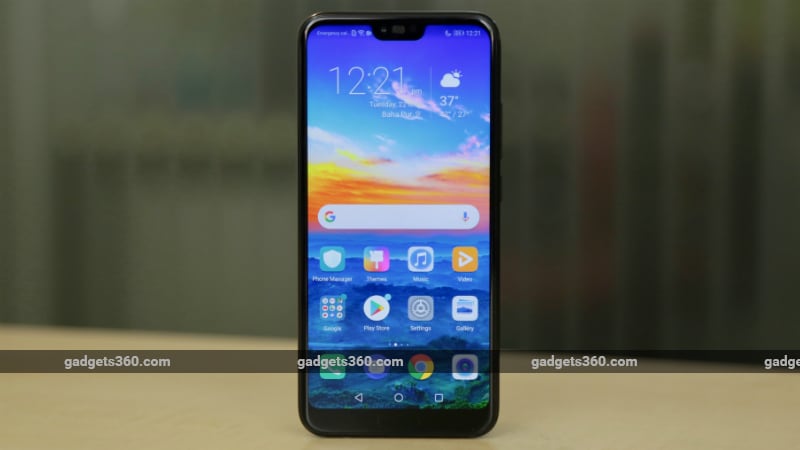 VerdictThe
Honor 10 is undoubtedly the most capable smartphone that Huawei's
sub-brand Honor has ever released in India. It has a sleek and compact
design, a bright and punchy display, and heaps of power on board. While
the AI enhancements are gimmicky, the camera hardware is excellent and
capable of taking great photos.
VerdictThe
Honor 10 is undoubtedly the most capable smartphone that Huawei's
sub-brand Honor has ever released in India. It has a sleek and compact
design, a bright and punchy display, and heaps of power on board. While
the AI enhancements are gimmicky, the camera hardware is excellent and
capable of taking great photos.
The under-the-glass fingerprint
sensor, which might at first come across as futuristic, is a pain to
use. Battery life is also disappointing, and the phone tends to overheat
quite a bit when pushed. However, despite these issues, it is hard to
ignore the value for money that the Honor 10 offers. At Rs. 32,999, the
smartphone presents itself as a solid but less powerful alternative to
the pricier OnePlus 6.
Honor 7A and Honor 7C are the latest budget
smartphones from Huawei's youth-focused brand to hit the Indian market.
They have been launched within months of the Honor 7X and Honor 9 Lite
coming to the country. As per a Counterpoint report, Honor was the
fifth-biggest smartphone brand in India in Q1 2018 with around 3 percent
market share, almost all of which comes from the sub-Rs. 15,000 price
bracket. The Honor 7A and Honor 7C are the brand's first smartphones to
bring features such as face unlock, dual rear cameras, and 18:9 displays
to the sub-Rs. 10,000 segment.
In terms of pricing, the Honor 7A
price in India has been set at Rs. 8,999. It will come with 3GB of RAM
and 32GB of storage, and no other variant has been launched here. On the
other hand, the Honor 7C has been priced at Rs. 9,999 for a variant
with 3GB of RAM and 32GB of storage, while the other option with 4GB of
RAM and 64GB of storage, has a price tag of Rs. 11,999. Strangely, the
Honor 7C has been priced similarly to the Honor 9 Lite, which debuted
roughly four months ago. The
Honor 7A will be available starting at 12 noon on May 29, exclusively
on Flipkart. The Honor 7C will be available starting 12 noon on May 31,
exclusively on Amazon.in. Alternatively, users can also purchase the
handsets at Honor India's own online store. Both smartphones have a
premium design and decent specifications, and the company hopes to take
on the likes of the Xiaomi Redmi 5, Xiaomi Redmi Note 5, and Oppo Realme
1. We got a brief look at Honor's latest budget smartphones, and here
are our first impressions.
The
Honor 7A will be available starting at 12 noon on May 29, exclusively
on Flipkart. The Honor 7C will be available starting 12 noon on May 31,
exclusively on Amazon.in. Alternatively, users can also purchase the
handsets at Honor India's own online store. Both smartphones have a
premium design and decent specifications, and the company hopes to take
on the likes of the Xiaomi Redmi 5, Xiaomi Redmi Note 5, and Oppo Realme
1. We got a brief look at Honor's latest budget smartphones, and here
are our first impressions.
With a smaller 5.7-inch HD+ (720x1440
pixels) IPS LCD panel, the Honor 7A is definitely much sleeker and is
easier to fit in your hand. On the front, the phone has an 18:9 display
with onscreen controls for Android navigation. Above the display are the
front camera sensor, earpiece, ambient light sensor, and proximity
sensor. On the back of the smartphone, you can spot the dual rear camera
setup with an LED flash to one side. There is also a rear-mounted
fingerprint sensor and Honor branding on the back. On the right, you get
the volume keys above the lock/ power key. The of the handset has a
slot to house two Nano-SIMs and one microSD card. Finally, on the bottom
of the phone, is a Micro-USB port, a 3.5mm headphone socket, and the
speaker grille. On
the inside, the Honor 7A sports an octa-core Qualcomm Snapdragon 430
SoC, coupled with 3GB of RAM. These two budget handsets are, in fact,
the only Honor-branded phones in recent times to sport Qualcomm
Snapdragon SoCs. A variant with 2GB RAM and a single rear camera exists
abroad but has not been launched in India. Performance with EMUI 8.0
seems fluid but you will have to wait till we finish our full review to
see how this phone stacks up against the current competition at this
price level.
On
the inside, the Honor 7A sports an octa-core Qualcomm Snapdragon 430
SoC, coupled with 3GB of RAM. These two budget handsets are, in fact,
the only Honor-branded phones in recent times to sport Qualcomm
Snapdragon SoCs. A variant with 2GB RAM and a single rear camera exists
abroad but has not been launched in India. Performance with EMUI 8.0
seems fluid but you will have to wait till we finish our full review to
see how this phone stacks up against the current competition at this
price level.
Now, let's talk about the Honor 7C. The larger
5.99-inch HD+ (720x1440 pixels) IPS LCD panel is one of the first things
you'll notice about the Honor 7C. Its design is largely similar to that
of the Honor 7A. The rear has a similar dual-camera module, plus the
fingerprint sensor and Honor branding in the same spots. The placement
of the buttons, sensors, and connectors is also the same. This phone is
powered by the Qualcomm Snapdragon 450 SoC, which is the same one that
powers the Xiaomi Redmi 5.Both
smartphones run EMUI 8.0 on top of Android 8.0 Oreo. With multiple
feature additions over the years, the EMUI Android skin has somewhat
matured and can be considered among the most versatile currently
available. It has a few nifty features such as Huawei Histen for better
audio quality, Ride Mode for bikers, and single-touch fingerprint access
to Paytm. It also has knuckle gestures, a one-handed mode, an
intelligent messages app, and automatic toggles for Wi-Fi and mobile
data. Our detailed review will list the pros and cons of the phones'
software.
In our initial experience with both the Honor 7A and Honor 7C, we found the UI to be snappy.
However,
bloatware is an issue. The Honor 7A and Honor 7C both have five
preinstalled Gameloft games, social media apps such as Facebook
Messenger, Instagram, and Truecaller, and others including Netflix and
UC Browser. However, most of them can be uninstalled to clear up some
storage space. The Settings menu is also a bit cluttered and could be
better arranged.
Asus has often experimented with emerging product
markets such as netbooks, wearables, tablets, and of course smartphones.
The company's biggest success in the Indian smartphone market was back
in 2014, when it was one of the first to kick off the low-cost
smartphone war. The original ZenFone 4, ZenFone 5, and ZenFone 6 were
all quite popular, and plenty of people gave the then relatively
unfamiliar brand a chance.
Since then, Asus has tried a number of
strategies: going exclusively high-end with the ZenFone 3 series, then
focusing on selfies with the ZenFone 4 series, and targeting tiny niches
now and then with products such as the ZenFone AR, ZenFone Zoom S, and
ZenFone Live. However, new Chinese brands had moved in on the value
market during that time, and none of Asus' recent efforts achieved the
same level of success.
Now, Asus trying to going back to its
strategy of delighting buyers with devices that have premium features at
almost impossibly affordable prices. More specifically, it's looking to
reclaim the sub-Rs. 15,000 segment where Xiaomi and Lenovo effectively
have a stranglehold. It will be tougher than before, but the more
options, the better for buyers.
The new ZenFone Max Pro M1 was
developed specifically for India, according to Asus, and it could be the
first of many such devices. Its chief purpose is to knock the Xiaomi
Redmi Note 5 and Redmi Note 5 Pro off their perches, and with a starting
price of Rs. 10,999, we're paying attention.
We were able to
spend some time with a pre-sale version of this phone prior to its
official launch, and while there were a few elements that weren't quite
ready for release, we can tell you quite a lot about the ZenFone Max Pro
M1 - including whether or not it's the Xiaomi killer that Asus hopes it
will be.Asus ZenFone Max Pro M1 designFirst
of all, this is quite a good-looking phone. It will be available in
Grey and Midnight Black, and our review unit is the latter. It's more of
a really dark navy blue than black, and you'll see that more under
strong light. It feels pretty good, with a non-slippery back and
rounded-edge glass on the front. Asus says that it has used
"high-quality durable glass", but it isn't branded and isn't
specifically described as reinforced.
The frame is made of
aluminium and there's a metal backplate. There are no sharp edges and
even the camera module barely protrudes at all. One problem is how badly
the rear gets smudged with fingerprints. The Asus ZenFone Max Pro M1 is
also a bit thick at 8.61mm and somewhat heavy at 180g. Because of its
size, you won't be able to reach all parts of the screen with one thumb,
and it can be a little top-heavy when typing with both thumbs at
keyboard level. However, the fingerprint scanner is within easy reach,
and was quick most of the time. We had to deal with a few failed
recognition attempts early in our review process, but an OTA update
fixed most of these issues mid-way.
There's the mandatory 18:9
screen in the front, with rounded corners and narrow borders on either
side. The power and volume buttons on the right are within easy reach,
as is the fingerprint sensor on the back. We're slightly disappointed to
see a Micro-USB port on the bottom rather than Type-C, but we can live
with this. There's also a 3.5mm audio socket and a single speaker. The
tray on the left has cutouts for two Nano-SIMs as well as a microSD
card.
In the box, you get a 10W charger, a USB cable, some
warranty and other leaflets, and a little cardboard accessory called the
Max Box. This is essentially a foldable stand for the phone with a
cutout in its base that helps direct and amplify sound. There's no
headset, screen protector, or case of any kind bundled with the Asus
ZenFone Max Pro M1. Asus ZenFone Max Pro M1 specifications and softwareThe
big news here is the use of Qualcomm's Snapdragon 636 processor,
designed for premium mid-range smartphones, in a device at this price
level. It's no surprise that this is the same processor that Xiaomi
chose for its Redmi Note 5 Pro. It is also interesting to note that Asus
is using the same processor in its "lite" flagship ZenFone 5 (2018). We
were expecting this phone to launch in India around now but it's
positioned in a much higher product segment so we'll have to see how
that plays out now. As a sidenote, we can now also see why Qualcomm
decided to introduce a Snapdragon 700 series to fill the gap between
this segment and the flagship Snapdragon 845.
Asus ZenFone Max Pro M1 specifications and softwareThe
big news here is the use of Qualcomm's Snapdragon 636 processor,
designed for premium mid-range smartphones, in a device at this price
level. It's no surprise that this is the same processor that Xiaomi
chose for its Redmi Note 5 Pro. It is also interesting to note that Asus
is using the same processor in its "lite" flagship ZenFone 5 (2018). We
were expecting this phone to launch in India around now but it's
positioned in a much higher product segment so we'll have to see how
that plays out now. As a sidenote, we can now also see why Qualcomm
decided to introduce a Snapdragon 700 series to fill the gap between
this segment and the flagship Snapdragon 845.
The other big
highlight on the ZenFone Max Pro M1 spec sheet is a 5000mAh battery.
Asus has used the Max name for phones with big batteries before, so this
is a fitting continuation. This explains the phone's relative bulk and
weight, and considering how impressed we were with the Redmi Note 5
Pro's battery life, we hope this phone blows us away.
We're glad
to see that there's no notch on the 5.99-inch screen. It has an 18:9
aspect ratio and resolution of 1080x2160. The corners are rounded, and
Asus claims a 450nit maximum brightness with a contrast ratio of 1500:1
and 85 percent reproduction of the NTSC colour gamut. In terms of
design, this phone isn't exactly borderless but it does look slick and
modern. The screen is bright enough for outdoor use, and colours are
quite vibrant. We had no complaints about viewing angles either. There's
a night mode as well as manual colour temperature adjustment in the
Settings app.
You can choose between two variants of the ZenFone
Max Pro M1: one has 3GB of RAM and 32GB of storage priced at Rs. 10,999,
while the other - priced at Rs. 12,999 - has 4GB and 64GB respectively.
In terms of pricing, we’d say that this is pretty unbelievable value,
beating the benchmark set by Xiaomi in this price segment. In
addition to two Nano-SIM slots, this phone has a dedicated microSD card
slot, and capacity support goes up to 2TB. You can use two 4G SIMs at a
time, but only one will run at 4G speed while the other is limited to
3G. VoLTE is supported too. There's single-band Wi-Fi 802.11 b/g/n which
is a surprise, considering that the Snapdragon 636 supports faster
Wi-Fi 802.11ac. However you do get Bluetooth 5 with aptX audio.
In
addition to two Nano-SIM slots, this phone has a dedicated microSD card
slot, and capacity support goes up to 2TB. You can use two 4G SIMs at a
time, but only one will run at 4G speed while the other is limited to
3G. VoLTE is supported too. There's single-band Wi-Fi 802.11 b/g/n which
is a surprise, considering that the Snapdragon 636 supports faster
Wi-Fi 802.11ac. However you do get Bluetooth 5 with aptX audio.
Asus
has ditched its custom ZenUI and apps in favour of stock Android 8.1
with this model, which is quite a big surprise considering how much the
company usually trumpets all the little things it pays attention to in
terms of shortcuts and customisations. The company tells us that this
was in response to market research, and it decided that this was the
better approach for the intended market segment. Of course, it also
presents a huge contrast to Xiaomi's MIUI. Asus also told that it
intends to deliver updates all the way till Android Q, which would be a
pretty big bonus.
You get all the Android Oreo features such as
notification dots, action shortcuts on app icons, and split-screen
multitasking. We found ourselves missing simple things like an auto
brightness toggle in the quick shortcuts panel, and the ability to
double-tap the screen to wake the phone from sleep. We do know that
there are some customisations though. For example, Asus is advertising
facial recognition as a feature of this phone, but it hadn't been
implemented yet on the pre-release software running on our unit, so we
weren't able to test it for ourselves.
There's still a little
bloatware, but it's manageable. You get Facebook, Instagram, Messenger,
and Go2Pay preinstalled, and none of them can be removed. There are also
a few useful ZenUI apps - Voice Recorder, Calculator, and FM Radio. Asus ZenFone Max Pro M1 performance, battery life, and camerasOur
review unit was the variant with 3GB of RAM and we didn't feel at any
point that this was too little. The ZenFone Max Pro M1 ran all our apps
smoothly, and every part of the Android UI was snappy at all times. We
enjoyed watching videos and playing games. This is a pretty good phone
for entertainment, although the rear did get slightly warm after some
time.
Asus ZenFone Max Pro M1 performance, battery life, and camerasOur
review unit was the variant with 3GB of RAM and we didn't feel at any
point that this was too little. The ZenFone Max Pro M1 ran all our apps
smoothly, and every part of the Android UI was snappy at all times. We
enjoyed watching videos and playing games. This is a pretty good phone
for entertainment, although the rear did get slightly warm after some
time.
Benchmark scores were very high, thanks to the Snapdragon
636 processor. Other than Xiaomi's Redmi Note 5 Pro, the Asus ZenFone
Max Pro M1 doesn't have much competition in its price band. AnTuTu gave
us 114,096 points, and Geekbench's single- and multi-core results were
1,330 and 4,755 respectively. GFXBench's T-rex test ran at 34fps, and
3DMark Slingshot gave us a score of 1,440.
The battery was able
to get us through a full working day with a fair bit of videos streaming
and some time spent playing 3D games, but that isn't especially
impressive considering its 5000mAh capacity. Our video loop battery test
ran for 13 hours, 29 minutes which is less than what the Redmi Note 5
Pro managed with a smaller battery, and also well short of Asus's claim
of 25 hours of continuous video playback. This is an odd result, and we
should note that power management could improve once Asus releases the
final shipping firmware.
There's a 10 Watt charger charger in the
box, and while Qualcomm Quick Charge isn't explicitly publicised as a
feature, our review unit did display the "charging rapidly" message. We
were able to go from zero to 15 percent in 10 minutes but it took just
under three hours to get to 100 percent.
The single speaker on
the bottom can get very loud, but music distorts badly at full volume.
The cardboard Max Box is being touted as an amplifier but it's more of a
gimmick. It unfolds very cleverly into a stand with a base that
channels sound towards you. There is a slight amplifying effect, but
while it might be useful for music or calls, you can't use it when
watching videos in landscape mode. Camera
quality is ususally where low-cost phones compromise the most so we
were curious to see what the ZenFone Max Pro M1 has in store for us.
Asus has outfitted the smartphone with a 13-megapixel camera and
5-megapixel depth sensor on the rear, which meets the requirement for
dual cameras. On the front, there's an 8-megapixel camera with its own
flash.
Camera
quality is ususally where low-cost phones compromise the most so we
were curious to see what the ZenFone Max Pro M1 has in store for us.
Asus has outfitted the smartphone with a 13-megapixel camera and
5-megapixel depth sensor on the rear, which meets the requirement for
dual cameras. On the front, there's an 8-megapixel camera with its own
flash.
We found the camera app to be a little confusing, with
controls that weren't well laid out at all. For example, the flash
settings are in a menu and it takes three taps to turn it on or off.
There's also no way to know what state it's in unless you open the menu
to check. There's a "depth mode" toggle rather than a separate portrait
mode, so you might also not always realise when it's enabled. It also
takes three taps to get into video mode and begin recording. There are
some scene modes and beautification, but no manual mode.
The rear
camera can record 4K video but for some reason there are two resolution
options, 4K DCI and 4K UHD, but there's nothing telling users what the
difference is (the former is 4096x2160 while the latter is 3840x2160).
On the other extreme, there are options to record at QVGA (320x240) and
CIF (352x240) resolutions which have no use case at all these days. We
saw some minor UI changes in OTA updates during the course of our
review, but we think a complete overhaul is necessary.
In the
daytime, the shots we took with the ZenFone Max Pro M1 were quite
vibrant, with colours that popped nicely. Some details and textures at a
distance weren't all that sharp, but close-ups fared relatively well in
this regard. The depth mode produced visible results with smooth
gradients between the foreground and background. At night, details get a
little fuzzy and it takes much longer to lock focus, but things are
largely under control.


 Video
taken during the day and at night was usable, but there was a lot of
focus shifting. The front camera is pretty good as well, and people will
be happy with the quality of selfies. The only trouble we had was that
the front flash doesn't provide soft illumination, but is in actual
flash that fires harshly in your face.
Video
taken during the day and at night was usable, but there was a lot of
focus shifting. The front camera is pretty good as well, and people will
be happy with the quality of selfies. The only trouble we had was that
the front flash doesn't provide soft illumination, but is in actual
flash that fires harshly in your face.
Asus has promised some
camera quality improvements with software updates that should be ready
by the time anyone buys this phone, but even as it stands at the time of
our review, the ZenFone Max Pro M1 is pretty decent.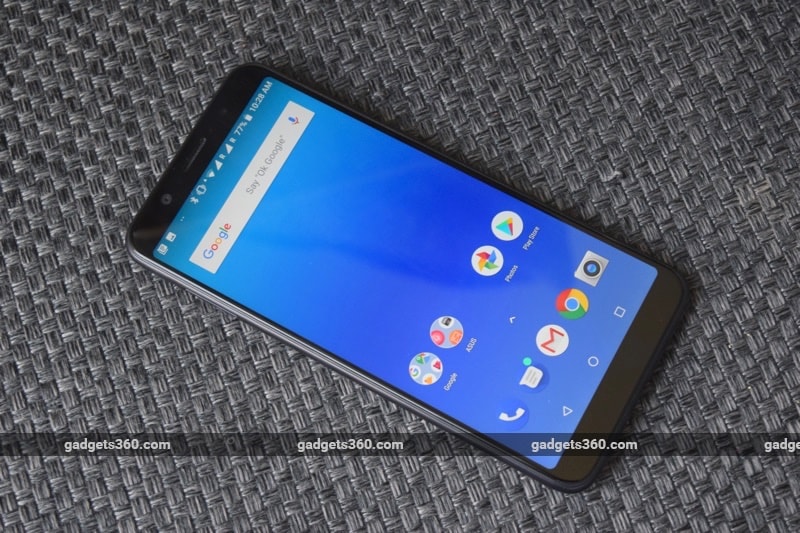 VerdictAsus
is going to get a lot of attention because of the pricing of the
ZenFone Max Pro M1, and it's positioning itself squarely as a Xiaomi
killer. The specifications match those of the Redmi Note 5 Pro, but
there are a few extra perks such as the bigger battery, dedicated
microSD slot, and front flash. However, the prices are more in line with
those of the Redmi Note 5, which is one rung lower in Xiaomi's lineup.
We also now know what the Moto G6 lineup will be like, and it seems that
there won't be any challenge from that corner in terms of
specifications, at least.
VerdictAsus
is going to get a lot of attention because of the pricing of the
ZenFone Max Pro M1, and it's positioning itself squarely as a Xiaomi
killer. The specifications match those of the Redmi Note 5 Pro, but
there are a few extra perks such as the bigger battery, dedicated
microSD slot, and front flash. However, the prices are more in line with
those of the Redmi Note 5, which is one rung lower in Xiaomi's lineup.
We also now know what the Moto G6 lineup will be like, and it seems that
there won't be any challenge from that corner in terms of
specifications, at least.
Aside from the question marks hanging
over the ZenFone Max Pro M1's camera quality and slightly underwhelming
battery life, Asus has managed to pull off a massive achievement. With
Flipkart on board as an exclusive partner, we're hoping that the
logistics of availability and distribution will not be bottlenecked.
Asus is promising that it has every intention of ensuring that there's
adequate supply to meet demand, and that it isn't interested in flash
sales or running out of stock quickly to create buzz. That's excellent
news for buyers. We can't wait to see how Xiaomi responds.
When
we look back at the time that has passed since the Asus ZenFone 4, 5 and
6 were launched in India, it's incredible to consider just how much
better budget smartphones have become. We would never have believed that
great phones could be this affordable, but here we are with the ZenFone
Max Pro M1. Asus is sending a clear message that it intends to do
whatever it takes to be successful in India, and once again, buyers win.
There is no denying that some smartphone
manufacturers like to take inspiration from Apple’s designs. In the
past, we have seen dozens of phones designed to look like the iPhone.
Now that Apple has made a big design change with the iPhone X, it was
only a matter of time before other manufacturers followed suit. Asus was
the first one to showcase the Zenfone 5 (2018) and Zenfone 5Z with a
design heavily inspired by the iPhone X. Vivo has also taken the same
approach with the Vivo V9, and since Asus hasn't launched its offerings
in India yet, Vivo V9 has become the first Android smartphone in the
country to launch with a notch.
The Vivo V9 is making headlines
thanks to its thin screen bezel and the notch that sits right at the
top. While the device looks pretty interesting, does it have the
hardware to justify its Rs. 22,990 price tag? We put it to the test.Vivo V9 designLooking
at the tall and narrow display on the Vivo V9, you might assume that
its aspect ratio is 18:9 like many others. However, power it on, and the
notch at the top is revealed. The notch is a lot smaller (in width)
than the one on the iPhone X, and houses an earpiece, a selfie camera,
and the proximity and ambient light sensors. It also houses a tiny
notification light in the centre, just above the earpiece.
The
notch is enveloped by the display on either side, which allows Vivo to
claim that the screen measures 6.3 inches. The screen-to-body ratio is
also said to be 90 percent. Pick the phone up and you will notice that
it is quite light, weighing just 150g, primarily thanks to the use of
plastic in its construction.
While it doesn’t feel as premium as
the similarly priced Moto X4, it doesn’t feel cheap either. The glossy
rear panel is made of high-quality plastic and isn’t slippery. However,
it picks up fingerprints quite easily and you will need to keep cleaning
it to preserve the glossy finish. Vivo has provided a clear case in the
box, which you can use to avoid this issue completely. Vivo
has placed the power and the volume buttons on the right, while the SIM
tray sits on the left. The Vivo V9 has a Micro-USB port at the bottom
along with the loudspeaker, a 3.5mm headphone jack, and a microphone.
The top is completely blank. Considering the price of the V9, we would
have preferred a USB Type-C port, which is now quite common even on
lower-priced phones such as the Xiaomi Mi A1.
Vivo
has placed the power and the volume buttons on the right, while the SIM
tray sits on the left. The Vivo V9 has a Micro-USB port at the bottom
along with the loudspeaker, a 3.5mm headphone jack, and a microphone.
The top is completely blank. Considering the price of the V9, we would
have preferred a USB Type-C port, which is now quite common even on
lower-priced phones such as the Xiaomi Mi A1.
Turn the phone
around and you will see that it has two cameras positioned vertically,
along with a single LED flash. The dual-camera module protrudes slightly
but has a metal rim around it which keeps the lenses from getting
scratched. Towards the centre of the phone's rear is a fingerprint
reader, and a Vivo logo below it. We found that the fingerprint reader
was placed a little to high for our liking. Other than that, the phone
is comfortable to use, thanks to its rounded corners which don’t dig
into your palms when holding it.Vivo V9 specifications, software, and featuresWhile
the Vivo V9 looks like a high-end smartphone, the internals powering it
are modest. Vivo has gone with the Qualcomm Snapdragon 626 SoC which is
an octa-core processor clocked at 2.2GHz. The phone has 4GB of RAM and
64GB of internal storage. It is a dual-SIM device and has two Nano-SIM
slots. Storage on the phone is expandable upto 256GB thanks to the
dedicated microSD card slot.
The Vivo V9 sports a 6.3-inch IPS
screen with a resolution of 1080x2280 pixels with a 9:19 aspect ratio.
It has decent viewing angles but we found that our unit's display had a
reddish tinge. Sadly this phone doesn't have options to tweak the
display output, and as a result, you will have to settle with what you
see.
There is no mention of any type of toughened glass, but Vivo
does ship a pre-applied screen protector with the V9. In terms of
connectivity, there is support for Bluetooth 4.2, dual-band WiFi, GPS,
USB-OTG, and FM Radio. There is support for 4G and VoLTE, but only one
SIM can access a 4G network at a time, while the other is restricted to
3G connectivity. Vivo
V9 ships with Android 8.1 Oreo and its custom Funtouch OS 4.0 UI on
top. It comes with the February Android security patch, which is fairly
recent. Funtouch doesn't implement Notification Dots or Smart Text
Selection, but you do get the useful Picture in Picture mode. The
company has used the display area around the notch quite well with the
right side displaying the battery percentage and other system status
icons such as Bluetooth, Wi-Fi, and VoLTE. The area to the left of the
notch shows the signal strength and the icons of apps with pending
notifications. Since the notch is relatively less wide, more information
can be displayed than on the iPhone X.
Vivo
V9 ships with Android 8.1 Oreo and its custom Funtouch OS 4.0 UI on
top. It comes with the February Android security patch, which is fairly
recent. Funtouch doesn't implement Notification Dots or Smart Text
Selection, but you do get the useful Picture in Picture mode. The
company has used the display area around the notch quite well with the
right side displaying the battery percentage and other system status
icons such as Bluetooth, Wi-Fi, and VoLTE. The area to the left of the
notch shows the signal strength and the icons of apps with pending
notifications. Since the notch is relatively less wide, more information
can be displayed than on the iPhone X.
Just like older versions
of Funtouch OS, this one also looks similar to iOS. As a result, you
have a Control Center when you swipe up from the bottom of the screen,
and notifications are accessible when sliding down from the top. The
on-screen navigation buttons at the bottom of the display can be
customised. Vivo
has also gone a step further and enabled gesture-based navigation, à la
the iPhone X. You can swipe up from the centre of the bottom to jump to
the home screen, or swipe up and hold to show the app switcher. Vivo
also gives you the option to hide the navigation buttons, truly
mimicking the navigation style of the new iPhone. During our review
period, we found that this device could execute these gestures without
any hint of lag. Apart from this, Vivo has also rearranged the Settings
app, and as a result, we had to spend some time looking for the settings
we wanted. You can use the global search feature to find settings but a
search function within the Settings app.
Vivo
has also gone a step further and enabled gesture-based navigation, à la
the iPhone X. You can swipe up from the centre of the bottom to jump to
the home screen, or swipe up and hold to show the app switcher. Vivo
also gives you the option to hide the navigation buttons, truly
mimicking the navigation style of the new iPhone. During our review
period, we found that this device could execute these gestures without
any hint of lag. Apart from this, Vivo has also rearranged the Settings
app, and as a result, we had to spend some time looking for the settings
we wanted. You can use the global search feature to find settings but a
search function within the Settings app.
Other features of the
Vivo V9 include Face Unlock which uses the front-facing camera
positioned in the notch to unlock the phone after a successful scan. You
also have the option to unlock apps using face recognition or a
fingerprint. There is a gaming mode which disables heads-up previews and
rejects calls automatically, except those from whitelisted contacts
which are answered automatically in hands-free mode while gaming. Vivo
has also thrown in a Picture in Picture mode for gaming, which lets you
run messaging apps such as WhatsApp, Line, and Facebook Messenger -
among others - in a floating window.
Gesture recognition lets you
launch apps by drawing alphabets when the screen is off. Vivo has
clubbed some of the other gesture features under a separate Settings tab
called Smart Motion. Air Operation uses the proximity sensor to wake
the phone up when you wave your hand over the display. If you haven’t
set a screen lock, you can also wake the phone from standby using this
Air Unlock method. Other gestures include double-tap to wake/ turn off
the display, raise to wake, and Smart Stay to keep the display on when
you are looking at it. The
Smart Call features let you answer a call by holding the phone close to
your ear, or answer directly in hands-free mode by waving a hand over
the phone. It also allows calls to be switched to hands-free mode when
you move the phone away from your ear. Smart Low Volume automatically
lowers the volume of an incoming call when the phone detects a face
looking at the screen. One-handed mode shrinks the display, making it
easy to use the phone with one hand. App Clone, a feature that lets you
run two instances of the same app, is also available. Smart Click lets
you toggle the flashlight by long-pressing the volume down button, when
the screen is off. This option can be customised so you can set the
button to launch any app.
The
Smart Call features let you answer a call by holding the phone close to
your ear, or answer directly in hands-free mode by waving a hand over
the phone. It also allows calls to be switched to hands-free mode when
you move the phone away from your ear. Smart Low Volume automatically
lowers the volume of an incoming call when the phone detects a face
looking at the screen. One-handed mode shrinks the display, making it
easy to use the phone with one hand. App Clone, a feature that lets you
run two instances of the same app, is also available. Smart Click lets
you toggle the flashlight by long-pressing the volume down button, when
the screen is off. This option can be customised so you can set the
button to launch any app.
This phone is packed with features but
that hasn't stopped Vivo when it comes to throwing in pre-installed apps
as well. The Vivo V9 comes with Flipkart, Prime Video, UC Browser,
Amazon, NewsPoint, WhatsApp, Facebook, and WPS Office preinstalled.
Thankfully, you can uninstall all of them to reclaim storage, if you
need to.Vivo V9 performance, cameras, and battery lifeThe
Vivo V9 runs without any lag or stutter. The UI isn’t very heavy, and
with 4GB of RAM, the phone can handle multitasking easily. We put the V9
through our tests where it managed 90,565 in Antutu while scoring 930
and 4546 in Geekbench 4’s single- and multi-core tests respectively.
Graphics performance is decent and the phone managed 21fps in GFXBench
T-Rex and 6.1fps in GFXBench Manhattan 3.1.
Vivo’s Face Unlock
feature worked decently in well-lit conditions. However, in low light,
the device would fail to recognise a face and ask for the PIN to unlock.
Using the fingerprint sensor was quicker in such situations.
Not
many apps are optimised for the V9’s 19:9 aspect ratio. As a result, we
found that the Vivo V9 runs apps letterboxed at either 18:9 or 16:9
based on what the app supports.
The 3260mAh battery offers
average battery life and we found that the phone needed to be plugged in
by late evening. Our usage included WhatsApp, watching a couple of
videos on YouTube, and playing PUBG Mobile as well as Space Frontier. If
your usage is less demainding, then you might be able to stretch it
until the end of the day. You can also enable power saving modes to help
you sail through. In our HD video loop test, the Vivo V9 could only
manage 8 hours and 49 minutes of continuous playback which is a lot
lower than average.
The dual camera module on the Vivo V9
consists of a 16-megapixel primary sensor and a 5-megapixel depth
sensor. Vivo hasn’t made significant changes to the camera app compared
to its previous phones but has added AR stickers to keep up with the
times. The V9 has an AI-powered beautify mode which Vivo claims can
detect age, gender, texture, skin tone, and lighting conditions, and use
that information to enhance the output. This functionality is also
available for video calls when using WhatsApp, Facebook Messenger, and a
few other apps.
The default photo includes toggles for portrait
mode and live photo mode. You can switch to panorama mode or a
professional mode that lets you control the exposure, ISO, shutter
speed, white balance, and autofocus. Vivo has also added a shot refocus
feature that lets you shift focus after taking a shot.
Photos
taken with the Vivo V9 were a mixed bag. We found that the phone could
deliver decent output in good light but the quality would suffer when
conditions weren’t favourable. In daylight, the V9 was quick to focus
and got the exposure right most of the time. However, the output was
slightly grainy and landscape shots lacked detail. Macros turned out
better as the phone could distinguish between the subject and the
background. Low light is where the camera quality dropped. It took
longer to lock focus and save images, resulting in blurry shots on a few
occasions. If a scene has decent lighting, you might be able to get a
clear image, but in low light, the Vivo V9 camera fails to capture
details accurately.


 The
Vivo V9 sports a 24-megapixel selfie camera with an AI-assisted
beautify mode. It does enhance shots automatically but you also have the
option to manually set the level of beautification. Selfies have good
amounts of detail and are good enough to go on social media sites. Video
recording on the V9 maxes out at 4K and you can also record in 1080p
and 720p resolutions. However, this phone lacks OIS (Optical Image
Stabilisation) and EIS (Electronic Image Stabilisation), causing footage
to be shaky.VerdictWith
the V9, Vivo has managed to ship the first Android phone with a notch
in India - for whatever that's worth. It has decent hardware, and the
software has lots of customisations. The display helps it stand out from
the rest, and those wanting to show off a phone with a notch now have
this option at a price that's certainly a lot more affordable than the
iPhone X.
The
Vivo V9 sports a 24-megapixel selfie camera with an AI-assisted
beautify mode. It does enhance shots automatically but you also have the
option to manually set the level of beautification. Selfies have good
amounts of detail and are good enough to go on social media sites. Video
recording on the V9 maxes out at 4K and you can also record in 1080p
and 720p resolutions. However, this phone lacks OIS (Optical Image
Stabilisation) and EIS (Electronic Image Stabilisation), causing footage
to be shaky.VerdictWith
the V9, Vivo has managed to ship the first Android phone with a notch
in India - for whatever that's worth. It has decent hardware, and the
software has lots of customisations. The display helps it stand out from
the rest, and those wanting to show off a phone with a notch now have
this option at a price that's certainly a lot more affordable than the
iPhone X.
Face recognition works most of the time but the usage
experience isn't as smooth as the rest of this phone's UI. At Rs 22,990,
the Vivo V9 misses out on things like a USB Type-C port which has now
become common. Battery life is weak, and if you are a heavy user, you
will need to find a power outlet by the evening. Camera performance is
decent in daylight but suffers in low light.
If you are looking
for an Android smartphone with a notch, the V9 only has the newly
launched Oppo F7 as competition at the moment, but the category is
expected to see a lot more launches. As for the V9, its big display,
thin borders and small notch help it grab attention. However, if you
aren’t interested in looks but are looking for more bang for the buck,
the 6GB RAM variant of the Moto X4 might suit you better, or you can
look at other top-rated phones in this price bracket.
After the high-profile launches of the Huawei P20,
P20 Pro and P20 Lite, it's now time for the company's sub-brand to
unveil a new smartphone at an event in London. The Honor 10 is the new
flagship from Honor, and features a glass-and-metal body, AI-enhanced
cameras, a 19:9 display with a notch, and Android 8.1 Oreo out of the
box. Honor 10 price in India has been set at Rs. 32,999 for the variant
with 6GB of RAM and 128GB inbuilt storage, the only model coming to
India. We got to spend some time with Honor's latest smartphone prior to
the official global launch, and here are our first impressions.
The
Honor 10 bears a slight resemblance to Huawei's recently launched P20
series of smartphones, at least from the front, thanks to the notch at
the top of the display. The notch is quite small and can be masked
thanks to an option in the settings. In our limited experience, most
first-party applications ran fine on the phone's screen, with the area
around the notch being used to display the time, battery level, and
other status icons.
The Honor 10 has a 2.5D curved glass back,
with an aluminium frame for rigidity. The smartphone looks sleek and
feels solid in the hand. Thanks to the minimal screen borders and
impressive 86.2 percent screen-to-body ratio, the Honor 10 is compact
and pocketable. The curved glass back, rounded corners and curved edges
also make it feel high-end.
The front fascia is dominated by a
5.84-inch full-HD+ IPS LCD that has an aspect ratio of 19:9 and a pixel
density of 432ppi. In our limited time with this smartphone, we found
the display to be bright and punchy, with great viewing angles and vivid
colours. A detailed analysis of the display will have to wait till we
conduct our exhaustive review.The
horizontally arranged dual-camera setup on that back has the words 'AI
CAMERA' emblazoned right next to it. The fingerprint sensor, which is
embedded beneath the glass up front, was fairly accurate but a bit slow
in our brief experience. The smartphone also supports face recognition,
which worked well in the time we spent with the device.
The Honor
10 is powered by Huawei's own Kirin 970 processor which includes
dedicated logic, dubbed the Neural Processing Unit, to handle artificial
intelligence computations locally instead of in the cloud. The Kirin
970 has been used in several of Huawei's premium models including the
Huawei P20 Pro, Honor View 10, and Huawei Mate 10 Pro.
Other
specifications include 6GB of RAM, a non-removable 3,400mAh battery, and
128GB of storage which cannot be expanded. Connectivity options include
Wi-Fi 802.11ac, Bluetooth 4.2, GPS, Glonass, NFC, 4G VoLTE and a 3.5mm
headphone jack. There's a USB Type-C Port for charging and data
transfers, and quick charging is supported.
In our limited time
with the Honor 10, it performed admirably, with butter-smooth animations
and minimal load times. We'll see how it performs in our full review,
when we can run games and synthetic benchmarks.
The Honor 10 runs
Honor's EMUI 8.1 skin atop Android 8.1 Oreo. EMUI has come a long way
in the past few years and is now fast, fluid, and snappy. That said, it
still feels cluttered and there is a lot of preinstalled bloatware.
Honor claims that EMUI 8.0 uses machine learning to intelligently
analyse user behaviour and allocate resources accordingly. We will test
these claims along with the phone's overall performance in our full
review. On
the imaging front, the Honor 10 features a 24-megapixel primary rear
camera with an aperture of f/1.8, and a secondary 16-megapixel camera
with an aperture of f/1.8. The Honor 10 can intelligently detect the
object or scene being shot and optimise image settings accordingly. At
the moment, the smartphone can detect 22 different types of objects and
scenes.
On
the imaging front, the Honor 10 features a 24-megapixel primary rear
camera with an aperture of f/1.8, and a secondary 16-megapixel camera
with an aperture of f/1.8. The Honor 10 can intelligently detect the
object or scene being shot and optimise image settings accordingly. At
the moment, the smartphone can detect 22 different types of objects and
scenes.
At the front, the Honor 10 has a 24-megapixel snapper
with a pixel size of 1.8 microns and a 3D Portrait lighting mode similar
to the one found on the iPhone X. AI enhancement is also supported, and
the camera app uses software algorithms for background blurring. While
it is too early to make a definitive assessment of photo quality, the AI
features seem promising, and the camera app is feature-packed and easy
to use.
With a promising set of cameras, good build quality, and a
top-notch display, the Honor 10 looks all set to reignite competition
in its price segment. We will soon be able to test it extensively, to
see how it fares against the competition in terms of performance,
battery life, photo quality, and software.
The Nokia 1 is not only the most affordable Android Nokia smartphone to date, it also is the first device from Finnish company HMD Global's stables to run Android Oreo Go edition, a version of Android designed with budget smartphones in mind. The Nokia 1 aims to redefine the low-end segment of the market and is targeted specifically at first-time smartphone users, especially those upgrading from feature phones.
Priced at Rs. 5,499, the Nokia 1 competes with the likes of the Xiaomi Redmi 5A and 10.or D, both of which run full-featured builds of Android. Does Android Go give the Nokia 1 an edge? Let's find out in our full review.
Nokia 1 design
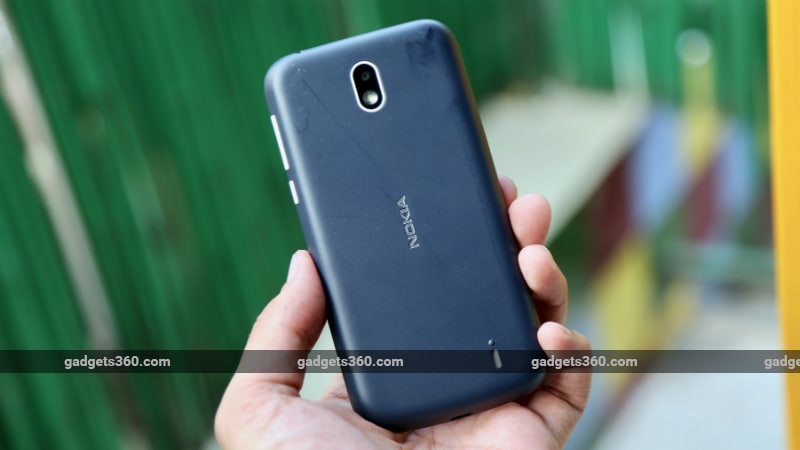
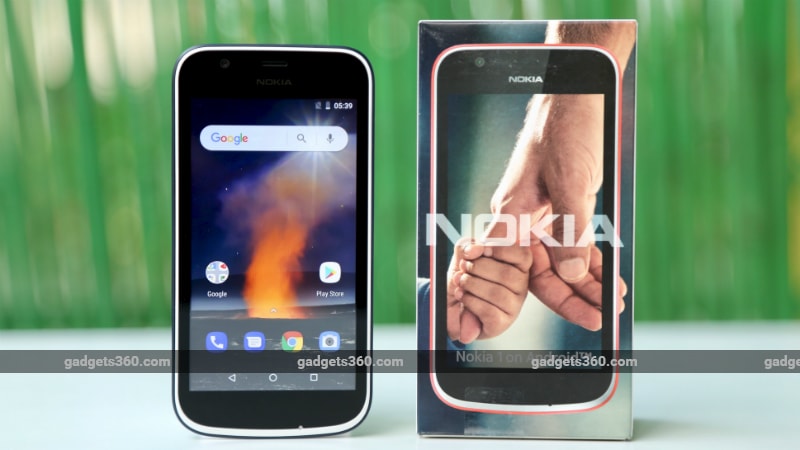
The compact and nifty design of the Nokia 1 comes across as a breath of fresh air in today's smartphone world which is dominated by oversized models with large screens. There are thick borders above and below the display, and a white plastic rim around the front fascia that gives the phone a funky two-tone look. The Nokia 1's design is reminiscent of past Lumia smartphones and manages to evoke a feeling of nostalgia.
The power and volume buttons located on the right are ergonomically placed and have good feedback. The top has a 3.5mm headphone jack and the bottom is home to a Micro-USB port. The rear camera and single-LED flash are placed in a pill-shaped housing at the back, which also has a white border that adds some design flair.
Thanks to the simple and colourful design and the nostalgic removable Xpress-on rear shells, the Nokia 1 comes across as fun and cheerful. That said, our unit's removable shell got pretty scratched and scuffed up even with careful use.
As expected from a phone in this price range, the Nokia 1 is made entirely out of plastic and does not feel very premium. At 9.5mm thick, this isn't the slimmest phone around, but it feels very comfortable in the hand thanks to its rounded body. Underneath the back cover reside the removable battery, two SIM slots, and a microSD card slot. The removable battery is a nice feature, which is rarely seen in smartphones these days.
With the Nokia 6, Nokia 8 and Nokia 3, HMD Global established quite a reputation for building rugged and durable smartphones. Thankfully, the Nokia 1 carries that trait forward. During our review, we dropped the phone a few times and it didn't get damaged at all, other than the scratches we mentioned earlier. The all-plastic Nokia 1 does not need to be coddled and babied.
 Nokia 1 specifications, performance, and software
The Nokia 1 is a smartphone designed specifically to run on the Android Oreo Go platform. Android Go is Google's second attempt at building a stripped-down version of Android specifically for budget smartphones with underpowered processors, minimal amounts of storage, and 1GB or less RAM.
Nokia 1 specifications, performance, and software
The Nokia 1 is a smartphone designed specifically to run on the Android Oreo Go platform. Android Go is Google's second attempt at building a stripped-down version of Android specifically for budget smartphones with underpowered processors, minimal amounts of storage, and 1GB or less RAM.
To that effect, the Nokia 1 is not a powerhouse by any means. It has a quad-core MediaTek MT6737M processor clocked at 1.1GHz coupled with 1GB of RAM. At 2150mAh, the battery is relatively tiny and the 4.5-inch IPS screen has a resolution of 480x854 pixels (FWVGA).
The Nokia 1 is available in only one variant, with 8GB of internal storage, though that can be expanded using a microSD card of up to 128GB. On the imaging front, the smartphone has a 5-megapixel rear camera with a fixed-focus lens and an LED flash, as well as a 2-megapixel fixed-focus front camera. Connectivity options include 4G VoLTE, Wi-Fi 802.11 b/g/n, Bluetooth 4.2, GPS/ A-GPS, FM radio, Micro-USB, and a 3.5mm audio jack.
Although navigating through the core user interface is reasonably zippy, the phone slows down dramatically with even 5-6 apps open in the background. We experienced stutters, frame rate drops, and keyboard lags while going about simple day-to-day tasks such as scrolling through our Twitter feed, taking pictures, browsing mobile-optimised websites, and chatting on WhatsApp.
Even first-party applications such as the Messaging app lagged and took a second or two to render correctly on screen, which really threw us off. There were some glaring misfires - the default Maps Go app could never find our location, and Google Go kept on crashing till we performed a system reset. In our experience, the phone also got quite warm to the touch when playing games with a small number of apps running in the background. To put it bluntly, the user experience took us back in time to an era where budget phones were laggy and frustrating to use, something we no longer see in this price segment.
The Nokia 1 does not handle games very well. Even Subway Surfers, a fairly light game which runs without a hiccup on most smartphones, saw frame drops and stutters on the Nokia 1.
We put the Nokia 1 through our tests where it managed a score of 2,452 in PC Mark's Work 2.0 benchmark, 81 in 3D Mark's Slingshot, and 471 and 1,207 in Geekbench's single-core and multi-core tests respectively. We tried running AntuTu multiple times but failed to get a result, and the device did not support 3D Mark's Slingshot Extreme test.
 With Android Go, Google has reworked nearly all of Android's default applications to use less data and consume less space, and also modified the system UI and kernel to support devices with as little as 512MB of RAM.
"With Android Oreo (Go edition), we're not only providing Internet to every Indian, but are also making sure that entry-level devices are fully-functioning smartphones that can not only browse the Web but also can use apps", Google's Vice President of Product Management for Android and Google Play, Sameer Samat, told on the sidelines of the Google for India event held in December last year.
While this sounds very promising on paper, our first experience with Android Go has been less than stellar. The default applications are also a bit of a mixed bag. The YouTube Go application lacks crucial features such as subscriptions and personal suggestions, and is quite buggy. The app crashed on us several times during our testing as well. On the positive side, it does offer the ability download videos at different resolutions, which should help users control their data usage and also conserve storage space.
The Maps Go app is another misfire. In our experience, the application failed to load directions four out of five times. When it did work, it asked us to download the full version of the Maps app from the Play Store for turn-by-turn navigation, defeating its very purpose.
That said, Google has done a good job with the Google Go application which offers shortcuts to features like translation, GIF search, and voice search. Google has also added bookmarks to a multitude of websites in categories such as Social, Entertainment, News, Shopping and so on. While useful, we did face stability issues with this app as well.
The Files Go applications is a pretty nifty new feature, especially for a smartphone like the Nokia 1 which has a paltry 8GB of internal storage. Not only is it a fully-featured file manager, it also helps you manage storage and offload unneeded files to the cloud. The stripped-down Play Store has a special section for apps that work well with Android Go, but as of the publishing of this review, the lineup is quite sparse.
 Nokia has given this device some of its own customisations. Glance Screen displays notifications and alerts you to unread messages and calls on the lockscreen. This is a nice value addition and is rarely, if ever, seen on phones in this price range.
Overall, though, our experience was far from satisfactory in terms of performance. It is quite difficult to ascertain the root of the problems. If the Nokia 1 was running the familiar mainstream build of Android, it would have been easy to hold the phone's weak specifications responsible. However, Android Go is a new platform designed specifically for this level of hardware. Either way, these performance issues don't make for a ringing endorsement for the platform.
We weren't expecting any miracles from the 4.5-inch FWVGA IPS display, and as such we were not really surprised that it is quite dull and hard to view under bright lights. In our experience, colours seemed washed-out, and the low resolution (480x854) resulted in every pixel being visible to the naked eye. That said, touch response was satisfactory and viewing angles were quite good.
In our experience, calls were clear and crisp, though we did have dropouts in areas known to have strong connectivity. The single speaker at the back is surprisingly loud and does not distort at high volume. The bundled earphones are extremely mediocre which is not a surprise at this price point. Brownie points must be given to HMD Global though for at least including a pair of earphones in the box.
Nokia 1 cameras and battery life
The cameras on the Nokia 1 are a bit of a disappointment. Photos taken with the rear camera in low light had a lot of noise, and the colours were washed out. In our experience, shots taken in adequate light were average with fairly accurate colours. That said, detail was also lacking - objects had jagged edges and textures were not smooth. The fixed-focus lens made us struggle with macros and close-up shots. Video recording goes up to 720p, and we found that the clips we recorded were noisy and a bit jerky.

 The front facing camera is strictly average as well. It really struggles in low light and produces noisy and muddy photos. Shots taken in daylight have an adequate amount of detail and are good enough for social media use. The camera app itself is easy to use and has a manual mode that lets you control the white balance and exposure. However, it is a bit slow and takes a few seconds to process each image.
In our HD video loop battery test, the Nokia 1 lasted 8 hours and 45 minutes, which is disappointing. Real-world performance was average as well. We found ourselves reaching for the charger by 7-8pm each day, after medium to intensive use. We found that the Nokia 1 took close to two hours to charge fully, which is longer than what we have seen from smartphones with larger batteries.
 Verdict
The biggest issue with the Nokia 1 is the Rs. 5,499 sticker price. If this smartphone had been priced somewhere in the vicinity of 3,000 to 4,000 rupees, it could have been a viable option for feature phone users looking to upgrade. Jio users can take a look at the cashback offer which effectively drops the price of the phone down to Rs 3,299, but others should definitely take a long, hard look at the competition before parting with their hard-earned cash, as there are plenty of other options in the sub-Rs. 10,000 price segment.
Verdict
The biggest issue with the Nokia 1 is the Rs. 5,499 sticker price. If this smartphone had been priced somewhere in the vicinity of 3,000 to 4,000 rupees, it could have been a viable option for feature phone users looking to upgrade. Jio users can take a look at the cashback offer which effectively drops the price of the phone down to Rs 3,299, but others should definitely take a long, hard look at the competition before parting with their hard-earned cash, as there are plenty of other options in the sub-Rs. 10,000 price segment.
Both the Xiaomi Redmi 5A and 10.or D offer much more well-rounded experiences and run fully featured Android, and both are priced just a smidgen higher than the Nokia 1, making it extremely hard to recommend this smartphone. Android Go seems to be a work in progress at the moment, and the performance issues are just too substantial to ignore.
Huawei P20 Lite and P20 Pro smartphones have been
launched in India by the Chinese brand, which has already made a splash
with its sub-brand Honor. Huawei P20 Lite price is Rs. 19,999, much more
affordable than the Rs. 64,999 price tag of Huawei P20 Pro, whose USP
is the Leica-powered triple rear camera setup. However, it is the former
that is more likely to appeal to the masses, with its dual rear
cameras, an AI-powered selfie camera, and a display that flows from
edge-to-edge. Both the models will go on sale starting on May 3,
exclusively via Amazon India. We got to spend some time with the former
prior to the official launch, and here are our Huawei P20 Lite first
impressions.
This mid-range smartphone comes with 2.5D curved
glass back with glittery textures that make it look classy and sleek. We
found it easy to hold in one hand despite the large display up front.
However, the black version that we used is an absolute fingerprint
magnet.
The vertically oriented dual-camera module is in the
upper right corner of the rear of the Huawei P20 Lite. There's also a
centrally located fingerprint sensor and a Huawei logo on the bottom
right. The front of the phone is dominated by the 5.84-inch full-HD+
display that flows from edge to edge. It has an aspect ratio of 19:9 and
a pixel density of 432ppi.
Just like its more expensive cousin,
the Huawei P20 Lite has a notch up front that is customisable, and
thankfully quite small. In our limited time with the device, we found
the display to be quite satisfactory, with vivid and punchy colours, and
good viewing angles.The P20
Lite is powered by Huawei's own Kirin 659 processor which has been used
for several Honor smartphones such as the Honor 7X, Honor 9 Lite, and
Honor 9i. Other specifications include 4GB of RAM, 64GB of internal
storage which can be expanded using a microSD card, and a non-removable
3000mAh battery.
While it is too early to make a definitive
assessment, the smartphone ran pretty smoothly during our initial
hands-on, with fluid animations and minimal load times for first-party
apps.
The P20 Lite runs Android 8.0 Oreo out of the box, with
Huawei's EMUI 8.0 skin on top. EMUI has made massive strides over its
past few iterations and is now lighter, cleaner, and noticeably faster.
Most first-party applications were able to run without a hitch at the
screen's 19:9 aspect ratio, with the area around the notch used to show
the time and system status icons.
The smartphone supports face
recognition, which worked quite well in our limited experience, and we
will test this feature further. As with most face recognition unlocking
implementations, this phone relies on the front camera, and does not
work in the dark.
While the P20 Lite lacks the much-hyped Neural
Processing Unit found in the P20 Pro, it still has a few tricks up its
sleeve. The 24-megapixel camera up front features 3D facial recognition
with 96 recognition points; a new beauty algorithm that modifies
shadows, colour temperature and skin tone; and augmented reality effects
in the form of selfie stickers. The P20 Lite can also take selfies with
a bokeh effect using software algorithms. At
the back, there is a 16-megapixel primary camera and a 2-megapixel
secondary sensor for depth-of-field effects. While it is too early to
make a definitive assessment of photo quality, the camera app seems
quite feature-packed and promising. In our experience, the AR effects as
well as facial recognition worked well.
At
the back, there is a 16-megapixel primary camera and a 2-megapixel
secondary sensor for depth-of-field effects. While it is too early to
make a definitive assessment of photo quality, the camera app seems
quite feature-packed and promising. In our experience, the AR effects as
well as facial recognition worked well.
With an edge-to-edge
display, a feature-packed camera app, classy design, and Android 8.0
Oreo out of the box, the Huawei P20 Lite looks set to be quite a
promising mid-range smartphone. We will have to test it extensively to
see how it fares against the competition.
Nokia, the bruised and battered stalwart which had
almost faded into obscurity, was brought back into the public
consciousness last year thanks to a small Finish company called HMD
Global. The Nokia 6 was HMD Global's first foray into the Android
smartphone world. Lauded for its build quality and design, the
smartphone was let down by its underpowered processor and underwhelming
cameras. Now, one year later, we have the new Nokia 6 (2018), which is
more or less an iterative update, and improves upon its predecessor in
these key areas.
With a Qualcomm Snapdragon 630 processor under
the hood, an improved camera with Zeiss optics, and a tweaked design,
the Nokia 6 (2018) aims to compete with the likes of the Xiaomi Redmi
Note 5 Pro and the Moto G5S Plus.Nokia 6 (2018) designLast
year's Nokia 6 was lauded for its tank-like build quality and
industrial design. HMD Global has stated that its biggest priority while
designing the new Nokia 6 was maintaining the build quality of its
predecessor. True to its word, the Nokia 6 (2018), which has been milled
from a single block of 6000 series aluminium, feels incredibly solid in
the hand.
During our review, we dropped the phone many times and
it did not incur any damage whatsoever. In fact, to kick things up a
notch and really test Nokia's durability claims, we tried to bend the
smartphone. All our attempts came to naught. Just like its predecessor,
the Nokia 6 (2018) is surely a contender for the most durable smartphone
of the year.
The solid construction comes with its own set of
caveats though. At 8.5mm, the smartphone is not the slimmest out there
and it feels quite bulky in the hand. The thick borders above and below
the screen do not help matters in the slightest. We felt that
single-handed use over long periods was not very comfortable as the
phone is a bit too wide. The
Nokia 6 (2018) is available in three different two-tone finishes. The
accents around the rear camera and the frame add some much-needed flair
to what is otherwise an understated industrial design.
The
Nokia 6 (2018) is available in three different two-tone finishes. The
accents around the rear camera and the frame add some much-needed flair
to what is otherwise an understated industrial design.
The power
and volume buttons on the right edge are ergonomically placed. The left
edge of the smartphone is blank save for the hybrid dual-SIM tray, which
makes you choose between a second SIM and a microSD card.
The
rear camera and dual-LED flash are placed in an oval housing which has
ZEISS emblazoned in bold letters. The fingerprint sensor, which is found
right below the camera housing, is a letdown on all fronts. Not only is
is it slow and inaccurate at times, but the location is quite
unergonomic. We found our fingers hitting the LED flash rather than the
sensor on more than one occasion.Nokia 6 (2018) specificationsLast
year's Nokia 6 was hampered by its underpowered Qualcomm Snapdragon 430
processor. This time around, HMD Global has equipped the Nokia 6 (2018)
with a much more powerful Snapdragon 630 clocked at 2.2GHz.
There
are other substantial updates as well. The outdated Micro-USB port has
been replaced with a USB Type-C port, and Nokia is now committed to
Android One, which hopefully means even more frequent software updates.
HMD Global has also brought over two features seen in last year's
flagship Nokia 8 to the mid-range smartphone: Bothie mode and OZO audio. While
Xiaomi has a penchant for offering several variants of its smartphones,
Nokia has decided to keep it nice and simple with the Nokia 6 (2018).
At the moment, the smartphone is only offered in one variant, with 3GB
of RAM and 32GB of internal storage, which can be expanded using a
microSD card, though that is expected to change in the near future.
While
Xiaomi has a penchant for offering several variants of its smartphones,
Nokia has decided to keep it nice and simple with the Nokia 6 (2018).
At the moment, the smartphone is only offered in one variant, with 3GB
of RAM and 32GB of internal storage, which can be expanded using a
microSD card, though that is expected to change in the near future.
HMD
Global announced a renewed collaboration with imaging brand Carl Zeiss
last year, the fruits of which were seen in the Nokia 8. The company has
now brought Zeiss optics to its mid-range offerings as well. On the
imaging front, the Nokia 6 (2018) has a single 16-megapixel rear camera
with ZEISS optics, a dual-tone LED flash, an f/2.0 aperture, and
1-micron pixels. On the front, the smartphone has an 8-megapixel fixed
focus camera with 1.12-micron pixels and an f/2.0 aperture.
While
the battery capacity is unchanged at 3,000mAh, the new Nokia 6 features
fast charging. Connectivity options include 4G VoLTE, Wi-Fi 802.11ac,
Bluetooth 5.0, FM radio, GPS/ A-GPS, USB Type-C (USB 2.0), and a 3.5mm
headphone jack.Nokia 6 (2018) performance, software, and battery lifeThe
original Nokia 6 was a sleek and well-built smartphone that did not
have the power to match its looks. With the Snapdragon 630 under its
hood, the Nokia 6 (2018) is a different beast altogether. During our
review period, it tackled both day-to-day tasks and intensive workloads
with ease.
Even the heaviest games did not exhibit any dropped
frames or stutters, which was common in last year's Nokia 6. We were
also pleased to report that this smartphone did not get warm even when
playing resource-intensive games, navigating around town with the GPS,
or recording videos in full-HD.
We put the Nokia 6 through our
tests where it managed a respectable 88,8869 in AnTuTu, 18fps in
GFXbench T-Rex, 10fps in GFX Bench Manhattan 3.1, and 879 and 4,931 in
Geekbench's single- and multi-core tests respectively. The
5.5-inch LCD screen is a step up from the one on last year's model,
with punchier colours and higher brightness. However, the viewing angles
could have been better.
The
5.5-inch LCD screen is a step up from the one on last year's model,
with punchier colours and higher brightness. However, the viewing angles
could have been better.
In our experience, calls were clear and
crisp. 4G connectivity was good even in areas known to have spotty
network reception. While the single loudspeaker located next to the USB
Type-C port delivers loud and clear audio, it is a step down from the
stereo speakers of last year's Nokia 6. The bundled earphones are
strictly average as well, which is not uncommon at this price point.
Last
year, HMD Global chose to differentiate its smartphones with near-stock
Android. Now, the company has taken things to the next level by
embracing Google's Android One programme. As a result, the Nokia 6
(2018) has no third-party bloat whatsoever. There are a few
non-intrusive value additions, such as the 'Glance screen' which shows
notifications for missed calls, alarms, and notifications without waking
the phone from sleep, and a couple of motion-triggered gestures. HMD
Global has promised updates to Android P as well as Android Q, when they
are released.
The Nokia 6 (2018) also has face recognition
built-in. While face unlock works well when lighting conditions are
favourable, it struggles in dimly lit environments and in direct
sunlight.
In our HD video loop battery test, the Nokia 6 (2018)
lasted 11 hours, 45 minutes, which is quite good. In terms of real-world
performance, we never found ourselves reaching for the charger before
the wee hours of the night. The phone easily lasted us the whole day
with medium to intense use, with juice left over for more. In our tests,
the bundled fast charger took the Nokia 6 (2018) from an empty tank to
around 40 percent in 30 minutes, which is fairly impressive.Nokia 6 (2018) camerasThe
cameras on the Nokia 6 (2018) are a bit of a mixed bag. Even with the
addition of the ZEISS moniker, the 16-megapixel rear camera struggles in
low light. Shots taken after dark had a fair bit of noise and lacked
detail. The autofocus was also quite inaccurate and we had to manually
tap the screen on several occasions.
That said, the camera
performs admirably when there is adequate light. During the day, the
camera managed to get the exposure right most of the time, and capture a
hefty amount of detail. Even shots taken in favourable lighting indoors
were crisp and detailed. The dual-LED flash does a decent job of
lighting up scenes. Colour reproduction however is not the this phone's
strong suit. In auto mode, the white balance was always off-kilter with
colours looking slightly pale and muted
Thankfully, there's a
powerful professional mode that lets you control the exposure, ISO,
shutter speed, white balance, and autofocus. By tweaking the settings
slightly, we managed to get accurate colours. We hope Nokia can fix this
problem with a software update, as most users will stick to the auto
mode which as of now has trouble rendering colours accurately.

 The
8-megapixel fixed focus front camera performs well when the lighting
conditions are good, and is actually a cut above the front camera found
on last year's Nokia 6. Image quality does take a dive when the light
goes down, and there's no front flash to compensate for that.
The
8-megapixel fixed focus front camera performs well when the lighting
conditions are good, and is actually a cut above the front camera found
on last year's Nokia 6. Image quality does take a dive when the light
goes down, and there's no front flash to compensate for that.
HMD
Global has equipped the Nokia 6 (2018) with the ability to take
photos/videos with the front and rear cameras at the same time. While
this feature has been saddled with a truly unfortunate marketing
term,-Bothie - it is actually pretty nifty. You can record your
reactions while your dog is chasing its own tail or your kid is doing
something endearing. Unfortunately, the quality of both cameras takes a
slight dip when using this mode. VerdictThe
Nokia 6 (2018) has terrific build quality, great performance, good
battery life, and pure Android with the promise of regular software
updates. The Nokia brand name has always been associated with solid
phones, and the Nokia 6 (2018) proudly carries that flag forward. It
might not be the flashiest smartphone around but is very capable
nonetheless.
VerdictThe
Nokia 6 (2018) has terrific build quality, great performance, good
battery life, and pure Android with the promise of regular software
updates. The Nokia brand name has always been associated with solid
phones, and the Nokia 6 (2018) proudly carries that flag forward. It
might not be the flashiest smartphone around but is very capable
nonetheless.
That said, the Nokia 6 (2018) is not a home run by
any means - it does not have an 18:9 display which is fast becoming the
norm. The rear camera struggles in low light, and has colour rendition
issues in auto mode. Its biggest competitor is the Redmi Note 5 Pro,
which is priced starting at Rs 14,999, offers an 18:9 display, and has
better hardware. What the Redmi Note 5 Pro lacks though is stock Android
and the same level of ruggedness as the Nokia 6 (2018).
Long before the iPhone X came into the picture,
the original Xiaomi Mi Mix wowed the world with its striking bezel-less
design, ceramic body, and edge-to-edge display. The Mi Mix was not the
first phone to embrace the bezel-less craze that has swept the
smartphone industry - that honour belongs to the Sharp Aquos Crystal -
but it was the first to marry such a concept with high-end internals and
a premium body.
The Mi Mix 2 that followed brought better
speakers and internals at the cost of slightly thicker screen borders.
Unlike the original Mi Mix - which was a concept phone with limited
availability - the Mix 2 saw a much wider release.
With
Qualcomm's latest high-end processor, updated cameras, and a slightly
tweaked design, the Xiaomi Mi Mix 2S is an iterative update that
improves upon the Mi Mix 2 in small yet significant ways. Just like its
sleek and snazzy predecessors, the Mi Mix 2S is a sight to behold -
especially in the new white colour which has silver highlights around
the camera and fingerprint sensor. The black version has gold highlights
and is an absolute fingerprint magnet.The
Mi Mix 2S has a curved ceramic back paired with an aluminium frame for
rigidity. Simply put, this phone looks gorgeous. Photos do not do it
justice - the ceramic back not only looks classy but also feels
extremely premium in hand. This time around, Xiaomi isn't planning to
offer a full-ceramic special edition - which is not a big loss as the
previous one never actually made it to India.It is extremely difficult
to tell the Mi Mix 2 and Mi Mix 2S apart when viewed face-on. The
majority of the Mi Mix 2S's design tweaks are seen at the back - with an
iPhone X-like vertically oriented dual-camera setup in the upper right
corner. While it may not win any points for originality, the new camera
arrangement helps the rear look much cleaner than before.
Xiaomi
has added a wireless charging coil beneath the ceramic rear panel, which
supports the widely-used Qi standard. In China, the top-end model of
the Mi Mix 2S comes bundled with a Xiaomi-branded wireless charger which
the company has priced at just CNY 99 (roughly Rs. 1,000). Xiaomi has
not confirmed at the moment whether the wireless charger will be
launched in India. The
5.99-inch 'edge-to-edge' display up front has an 18:9 aspect ratio and a
resolution of 1080x2160 (full-HD+). While many others in the industry
are moving towards AMOLED displays, Xiaomi has stuck with an LCD panel -
which has its own set of pros and cons. The blacks are not as deep as
we would have liked, but the colours are vivid and punchy. A full
analysis of the display will have to wait till we conduct our full
review.The Mi Mix 2S is powered by the same Qualcomm Snapdragon 845
processor found in other 2018 flagships such as the Samsung Galaxy S9
and Sony Xperia XZ2. Other specifications include 6GB or 8GB of RAM and
64GB, 128GB or 256GB of internal storage, depending on which variant you
choose. There's also a 3,400mAh battery with Quick Charge 3.0 support.
The
5.99-inch 'edge-to-edge' display up front has an 18:9 aspect ratio and a
resolution of 1080x2160 (full-HD+). While many others in the industry
are moving towards AMOLED displays, Xiaomi has stuck with an LCD panel -
which has its own set of pros and cons. The blacks are not as deep as
we would have liked, but the colours are vivid and punchy. A full
analysis of the display will have to wait till we conduct our full
review.The Mi Mix 2S is powered by the same Qualcomm Snapdragon 845
processor found in other 2018 flagships such as the Samsung Galaxy S9
and Sony Xperia XZ2. Other specifications include 6GB or 8GB of RAM and
64GB, 128GB or 256GB of internal storage, depending on which variant you
choose. There's also a 3,400mAh battery with Quick Charge 3.0 support.
In
our limited time with the Mi Mix 2S, it performed admirably - UI
animations were butter smooth, and navigating around the software was
quick and fluid. Compared to the Mi Mix 2, the camera app seemed more
responsive - with little or no lag between taking pictures.
With
just a few hours of hands-on time, it is too early to pass a judgement
on the Mi Mix 2S's performance. However, the top-of-the line
specifications and our initial impressions of its smooth performance
point towards a positive experience. At
the back, the Mi Mix 2 has a primary 12-megapixel Sony IMX363 sensor
with an aperture of f/1.8, four-axis optical-image stabilisation, and a
wide-angle lens. The secondary 12-megapixel camera has with a telephoto
lens, an aperture of f/1.8, and 2x optical zoom. The 5-megapixel front
camera is placed in the same awkward location as before - below the
display. The Mi Mix 2S supports face recognition and boasts of advanced
AI-backed beautification features.
At
the back, the Mi Mix 2 has a primary 12-megapixel Sony IMX363 sensor
with an aperture of f/1.8, four-axis optical-image stabilisation, and a
wide-angle lens. The secondary 12-megapixel camera has with a telephoto
lens, an aperture of f/1.8, and 2x optical zoom. The 5-megapixel front
camera is placed in the same awkward location as before - below the
display. The Mi Mix 2S supports face recognition and boasts of advanced
AI-backed beautification features.
While it is too early to make a
definitive assessment of photo quality, it is quite clear that the Mi
Mix 2S's cameras are a cut above the ones found on its predecessor. The
Mi Mix 2 had pretty underwhelming cameras, so the improvement is more
than welcome.
Nokia made a comeback to the smartphone market
last year, with brand custodian HMD Global launching a wide range of
smartphones across various price points. These smartphones used the
typical Nokia build quality to play the nostalgia card very well, and
also boasted of decent specifications, stock Android, and quick updates.
However, the market is crowded, and as most other smartphones were
moving to the 18:9 aspect ratio, last year's Nokia 5, Nokia 6 and Nokia 8
looked dated in comparison.
So when HMD Global had an event at
MWC this year, people were expecting more from the brand. The company
delivered with better specifications at multiple price points, and an
updated design for its Nokia 7 Plus. With an 18:9 display, the new 7
Plus is the first Nokia-branded smartphone to follow this trend. HMD
Global has also packed in a Qualcomm Snapdragon 660 processor and
enrolled into Google’s Android One programme. The smartphone has quickly
made its way to India with a price tag of Rs 25,999. At this price, the
Nokia 7 Plus looks well-equipped, but is it ready to take down the
competition? We put it to the test.Nokia 7 Plus designThe
Nokia 7 Plus stands out from the rest of the Nokia phones that launched
this year thanks to its 18:9 display. It curves at the edges, reminding
us of the Google Pixel 2 XL. HMD has built the Nokia 7 Plus quite well
and has used 6000 series aluminium for its unibody. The edges are
rounded off and the back has a ceramic coating to give it a smooth
finish and hide the antenna lines. We found the back to be very smooth
to the touch but did not find it slippery.
In order to make the
Nokia 7 Plus look distinct, the company has opted for copper accents for
the midframe, camera surround, fingerprint scanner, and its logo at the
back of both the white and black options. Pick the phone up, and its
heft is immediately noticeable, making this device feel solidly built.
HMD Global has opted for a 3800mAh non-removable battery on the Nokia 7
Plus which contributes to the weight of this phone. It
sports a USB Type-C port at the bottom, alongside the primary
microphone and a speaker grille. While the speaker can get loud, the
grille is tiny and is easy to muffle accidentally. There's still a 3.5mm
headphone jack, and you get in-ear headphones in the box. The metallic
buttons on the side are clicky and offer good feedback. HMD Global has
opted for a hybrid dual-SIM tray, so one Nano-SIM can be swapped for a
microSD card.
It
sports a USB Type-C port at the bottom, alongside the primary
microphone and a speaker grille. While the speaker can get loud, the
grille is tiny and is easy to muffle accidentally. There's still a 3.5mm
headphone jack, and you get in-ear headphones in the box. The metallic
buttons on the side are clicky and offer good feedback. HMD Global has
opted for a hybrid dual-SIM tray, so one Nano-SIM can be swapped for a
microSD card.
At the back, the Nokia 7 Plus sports dual cameras
with Zeiss branding. The camera module protrudes a little but the copper
trim should help protect the lenses from picking up scratches. The
phone also has a dual-tone LED flash.Nokia 7 Plus specifications and softwareHMD
Global took a conservative approach with most of its lineup last year
in terms of hardware, and faced some criticism as a result. it has taken
that feedback and made improvements to its new offerings. The Nokia 7
Plus, in fact, is one of the first smartphones in India to use the
Qualcomm Snapdragon 660 processor, which has eight cores, with four
clocked at 1.8GHz and the other four clocked at 2.2GHz. These are Kryo
260 cores that are manufactured on the 14nm FinFET process, with an
integrated Adreno 512 graphics processor. The phone also has 4GB of RAM
and 64GB of internal storage, which is expandable with a microSD card of
up to 256GB in the hybrid dual-SIM tray.
The 6-inch IPS display
sports a Full HD+ resolution and has Gorilla Glass 3 for protection. It
has good viewing angles and gets bright enough to be visible outdoors.
Other specifications on the Nokia 7 Plus include Bluetooth 5, Wi-Fi
802.11ac, GPS, GLONASS, and NFC. It also features an ambient light
sensor, proximity sensor, gyroscope, hall sensor, and an e-compass.
There is support for 4G and VoLTE on the primary SIM, while the second
SIM is restricted to 3G and 2G networks.
HMD Global has paid
attention to the cameras on the 7 Plus, and you get Zeiss optics at the
front and the back. The dual camera setup at the back consists of a
12-megapixel primary sensor with an f/1.8 aperture and 1.4-micron
pixels, plus a 13-megapixel sensor with a telephoto lens, f/2.6
aperture, and 1-micron pixels. The selfie camera has a 16-megapixel
sensor with an f/2.0 aperture. Software
is where the 7 Plus gets even more interesting, as HMD has gone with
Google’s Android One programme for its entire 2018 lineup. What this
means is that the phone comes with stock Android and no bloatware. Our
review unit was running Android 8.0 Oreo with the February security
patch, and was updated to Android 8.1 Oreo with the April security patch
within the test period. With no significant customisations on the Nokia
7 Plus, the UI is snappy and easy to use.
Software
is where the 7 Plus gets even more interesting, as HMD has gone with
Google’s Android One programme for its entire 2018 lineup. What this
means is that the phone comes with stock Android and no bloatware. Our
review unit was running Android 8.0 Oreo with the February security
patch, and was updated to Android 8.1 Oreo with the April security patch
within the test period. With no significant customisations on the Nokia
7 Plus, the UI is snappy and easy to use.
There are a few
gesture shortcuts, like the ability to double-click the power button to
launch the camera, use the fingerprint scanner to pull down the
notification shade, and lift to wake phone, among others. You also have
the option to double-tap the display to wake the device up.Nokia 7 Plus performance, cameras, and battery lifeThe
Nokia 7 Plus packs in good hardware at its price point. The Snapdragon
660 has a lot of grunt and can outperform the Snapdragon 625/626
processors. It also performed better in our benchmarks than the
Snapdragon 630 which powers the Moto X4 and the Helio P60 in the Oppo
F7. The Nokia 7 Plus can handle your daily grind and deliver a smooth
user experience without breaking into a sweat.
The fingerprint
scanner is positioned slightly too high for our liking, and we needed to
stretch a little to use it. It is reasonably fast but we have seen
better in this segment. Heavy apps and games are handled well, and the
Nokia 7 Plus also managed to sail through in our gaming tests. We played
Asphalt 8 and Clash Royale, and even used it for navigating around town
with GPS, and found that the phone could handle these tasks without
heating up.
In our benchmark tests, the phone returned 137,573 in
AnTuTu, 1,590 and 5,780 respectively in Geekbench's single-core and
multi-core tests. It also did quite well in graphics benchmarks, with
48fps in GFXbench's T-Rex test and 14fps in Manhattan 3.1. Battery
performance is very good and we found that idle drain was quite low. In
our HD video loop test, the smartphone managed 13 hours and 31 minutes
and we could end the day with some juice left in the tank. If you aren’t
into heavy games and your usage is restricted to messaging apps and
social media, we reckon the phone can last you well over a day before
needing to be plugged in. When the battery finally does run out, the
bundled charger is capable of filling it up to 100 percent in two hours.
Battery
performance is very good and we found that idle drain was quite low. In
our HD video loop test, the smartphone managed 13 hours and 31 minutes
and we could end the day with some juice left in the tank. If you aren’t
into heavy games and your usage is restricted to messaging apps and
social media, we reckon the phone can last you well over a day before
needing to be plugged in. When the battery finally does run out, the
bundled charger is capable of filling it up to 100 percent in two hours.
Nokia
smartphones in 2017 didn’t exactly have stellar cameras. Even the
flagship Nokia 8 fell short in terms of camera performance. The company
seems to have worked hard on fine-tuning its new lineup and the results
are evident.
Starting with the camera app, HMD has kept things
simple, but it isn’t completely stock. There are options for HDR,
beautification, and Bothie feature which lets you take shots using both
the front and rear cameras simultaneously. This feature is quite handy
for capturing events with your reactions in the same frame. You can use
it for vlogging, and HMD has even added a live mode that lets you stream
content directly to Facebook or YouTube. There are three microphones on
board along with Nokia’s OZO Audio technology which lets you capture
surround audio while recording video.
When taking photos with the
Nokia 7 Plus, we found that it was quick to focus and got the exposure
right most of the time. In daylight, the phone managed to capture good
amounts of detail. Colour reproduction was quite good and most images
appeared crisp. The telephoto lens offers a quick 2x optical zoom, while
the phone can also do up to 10x digital zoom. This is handy when you
want to capture distant objects, but we found that the secondary sensor
has a slightly cooler colour temperature in comparison to the primary
one. If you like taking portraits, you will enjoy the bokeh mode. It
uses the telephoto lens to blur out the background, and edge detection
is quite good.


 Low
light shots were decent, but fine grain was visible in the output when
we zoomed in. The phone uses a slower shutter to capture brighter images
and keep noise under control. As a result, you will need a steady hand
when shooting in low light. Auto mode aside, the 7 Plus does offer a pro
mode that lets you alter the white balance, ISO, shutter speed, and
exposure.
Low
light shots were decent, but fine grain was visible in the output when
we zoomed in. The phone uses a slower shutter to capture brighter images
and keep noise under control. As a result, you will need a steady hand
when shooting in low light. Auto mode aside, the 7 Plus does offer a pro
mode that lets you alter the white balance, ISO, shutter speed, and
exposure.
The selfie camera is good and captures detail quite
well when indoors. There's a beautification mode which smoothens faces,
and you have a slider to adjust the level. Video recording maxes out at
4K for the primary camera, while the selfie camera maxes out at 1080p.
While 4K footage did have a few shakes, 1080p video was stabilised.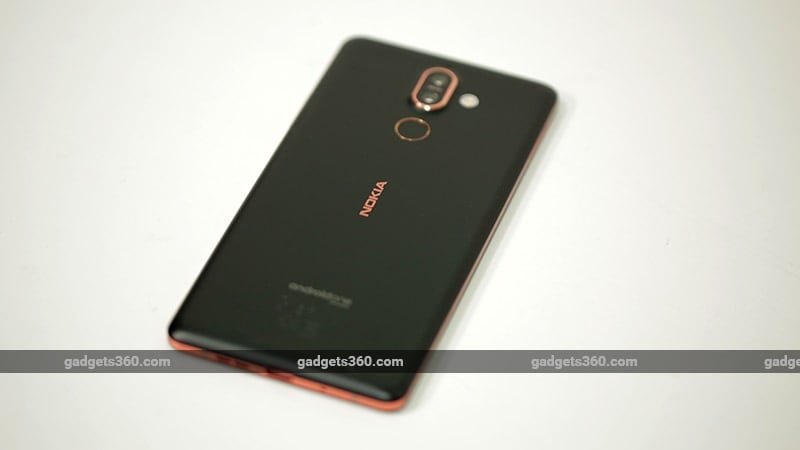 VerdictHMD
Global has managed to get quite a few things right with the 7 Plus. It
is up-to-date with an 18:9 display and feels like it is built to last.
The company has also managed to get the right balance of performance and
efficiency. The processor is powerful, yet frugal enough to get you
through the day without the battery needing to be recharged. As a part
of the Android One programme, the device is guaranteed to get quick
software updates and security patches. However, the camera could do with
some fine-tuning to improve low-light performance.
VerdictHMD
Global has managed to get quite a few things right with the 7 Plus. It
is up-to-date with an 18:9 display and feels like it is built to last.
The company has also managed to get the right balance of performance and
efficiency. The processor is powerful, yet frugal enough to get you
through the day without the battery needing to be recharged. As a part
of the Android One programme, the device is guaranteed to get quick
software updates and security patches. However, the camera could do with
some fine-tuning to improve low-light performance.
There are
very few recently launched models in this price range, most notably the
6GB RAM variant of the Oppo F7, so there isn’t a whole lot of
competition. However, the biggest threat to the Nokia 7 Plus is from
last year’s premium phones such as the Nokia 8, Honor 8 Pro, and the LG
G6, which offer strong hardware at lower prices than they were launched
at.
